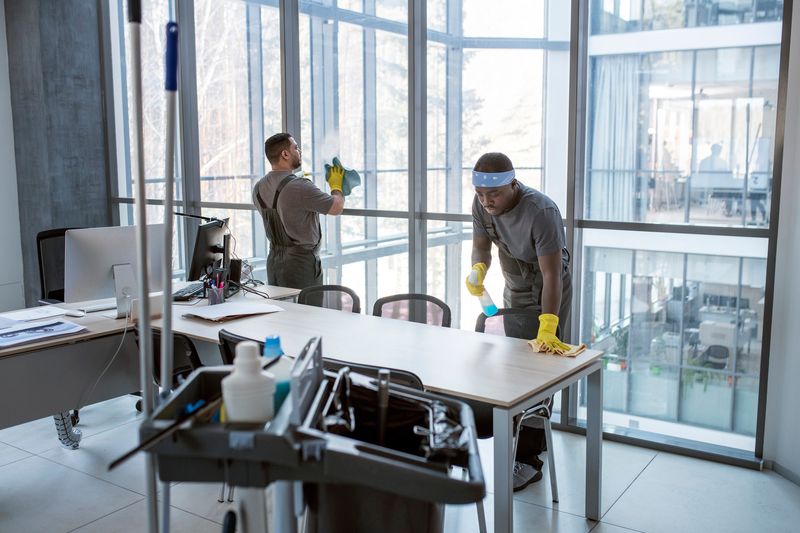
Walkthrough and Planning
Before any cleaning starts, the home needs to be looked at properly. That means checking the condition of each room, the materials involved, the type of buildup present, and any surfaces that need extra care.
This stage shows where the heavier work will be, what products make sense, how many team members are needed, and how the job should be sequenced for the best result. It is also one of the reasons serious deep cleaning quotes are built around real scope rather than guesswork, which we explain further in our deep cleaning pricing guide.
What We Usually Assess First
- kitchen, bathrooms, bedrooms, living areas, hallways, and stairs
- surface types such as tile, wood, laminate, glass, stone, and cabinetry
- problem zones like grease, limescale, dust, pet hair, and residue buildup
- client priorities and any delicate or high-risk areas
Who This Professional Deep Cleaning Process Is Best For
This type of process is best for homes that need more than routine upkeep. It makes the most sense when detail work has been put off for too long, when the home looks tidy but still does not feel properly clean, or when the property needs a visible reset before an important date or change.
It is also a strong fit for move-in or move-out situations, homes with pets, homes with visible kitchen or bathroom buildup, and homeowners who want a higher standard than a normal maintenance clean usually provides.
Homes That Usually Benefit Most
- homes with overdue detail work and visible buildup
- move-in or move-out reset situations
- homes with pets, hair, oils, or heavier day-to-day wear
- homes being prepared for guests, staging, or listing
- clients who want more than standard maintenance cleaning
Preparation Before Cleaning Starts
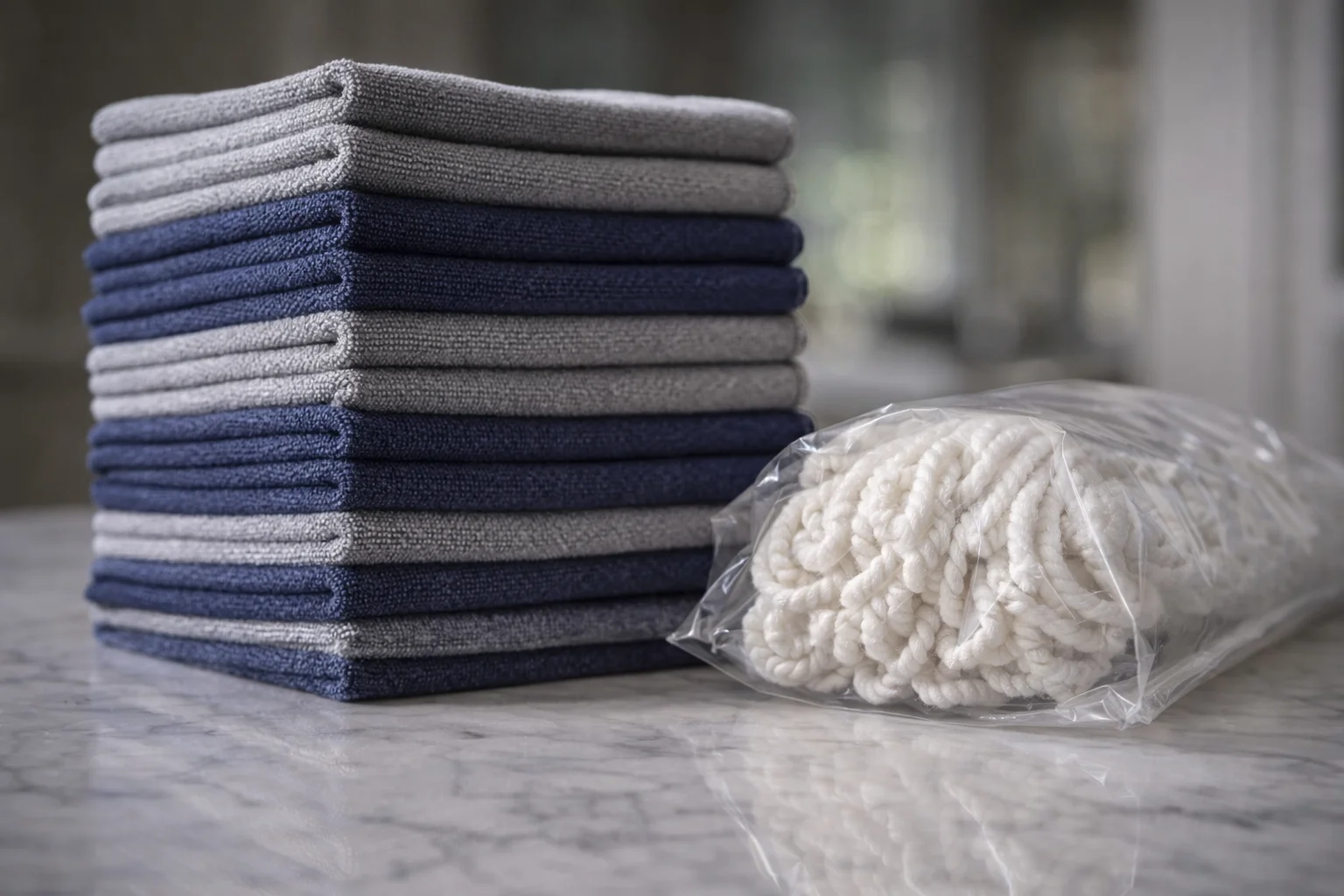
Preparation matters because deep cleaning should not spread dirt from one area into another or create extra mess during the process. Before the detailed work begins, tools, products, and cloth systems need to be set up properly.
This is also the stage where surface-safe professional products are chosen and diluted properly. Deep cleaning is not a one-bottle-for-everything service.
Dry Dusting and High-Reach Detailing First
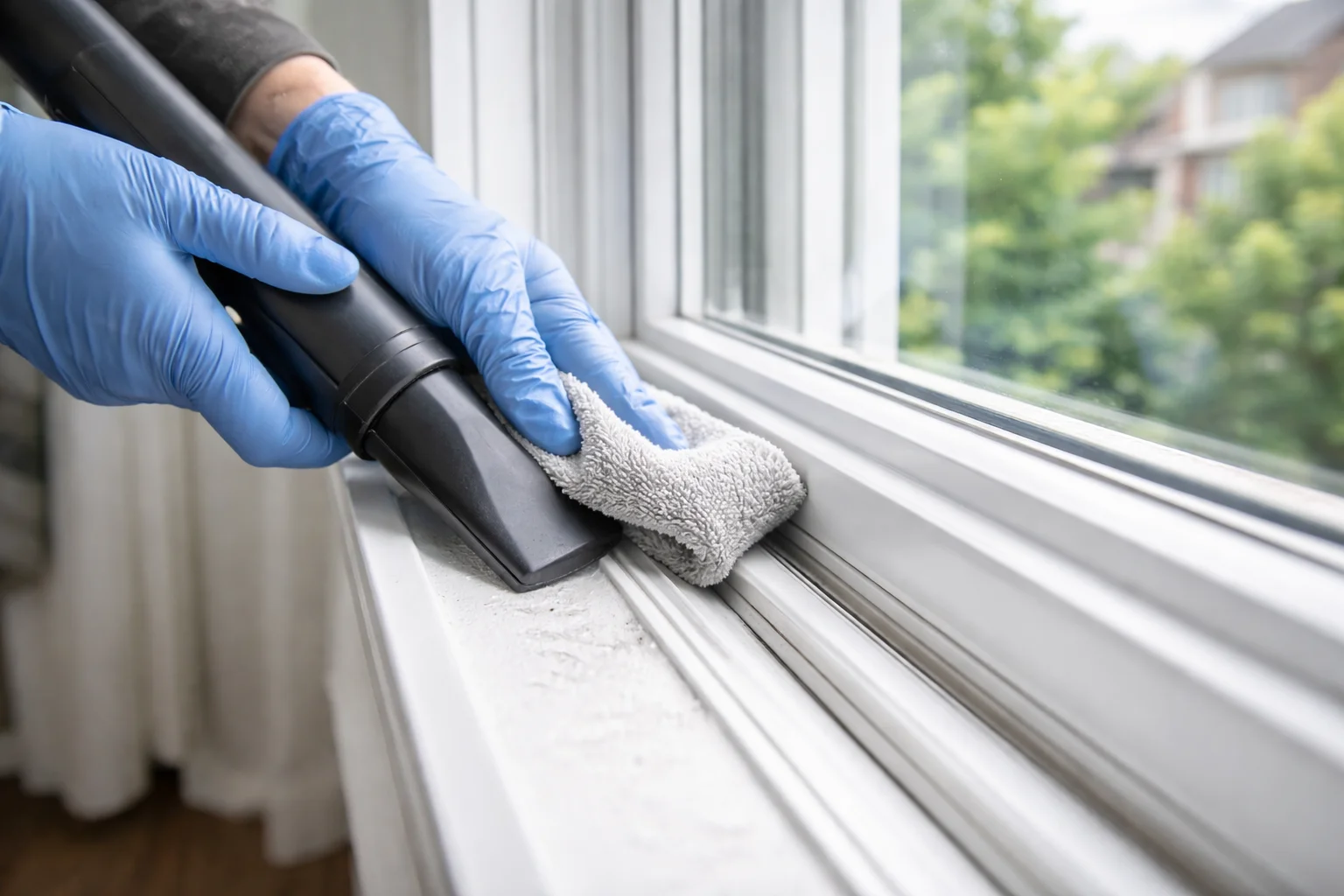
We start with dry work before introducing moisture. That matters because fine dust, cobwebs, and debris should be removed first rather than turned into damp residue later.
This stage often includes upper corners, door tops, vents, fans, reachable light fixtures, shelves, ledges, and other elevated or forgotten areas.
- fine dust is removed before moisture is used
- surfaces are easier to wipe clean afterward
- less smearing and less muddy residue
- better final finish overall
- dust mixes into damp streaks
- corners and vents stay dirty longer
- more rework is needed later
- the result usually looks less sharp
What Tools and Products Support This Deep Cleaning Process
A professional deep clean depends on more than labour. It also depends on using the right tools and surface-safe products at the right stage. Strong filtration, organised microfibre systems, and proper chemistry all help produce a better finish.
That is why product selection matters. The wrong product can leave haze, residue, streaks, or even surface damage, while the right product helps remove buildup more effectively and safely.
- same products used on multiple surfaces
- basic household tools only
- less filtration and dust control
- higher chance of streaks or residue
- surface-safe chemistry chosen by material
- stronger vacuuming and filtration support
- microfibre rotation by zone
- better control over dust, residue, and finish quality
Switches, Sockets, Handles, and Other Touch Points
This is one of the main differences between a basic clean and a true deep clean. Daily touch points slowly collect fingerprints, oils, dust, and grime, but most routine cleaning visits do not spend enough time on them.
In a detailed process, light switches, outlet covers, cabinet pulls, door handles, rails, and similar contact areas are cleaned carefully and one by one.
Kitchen Deep Cleaning
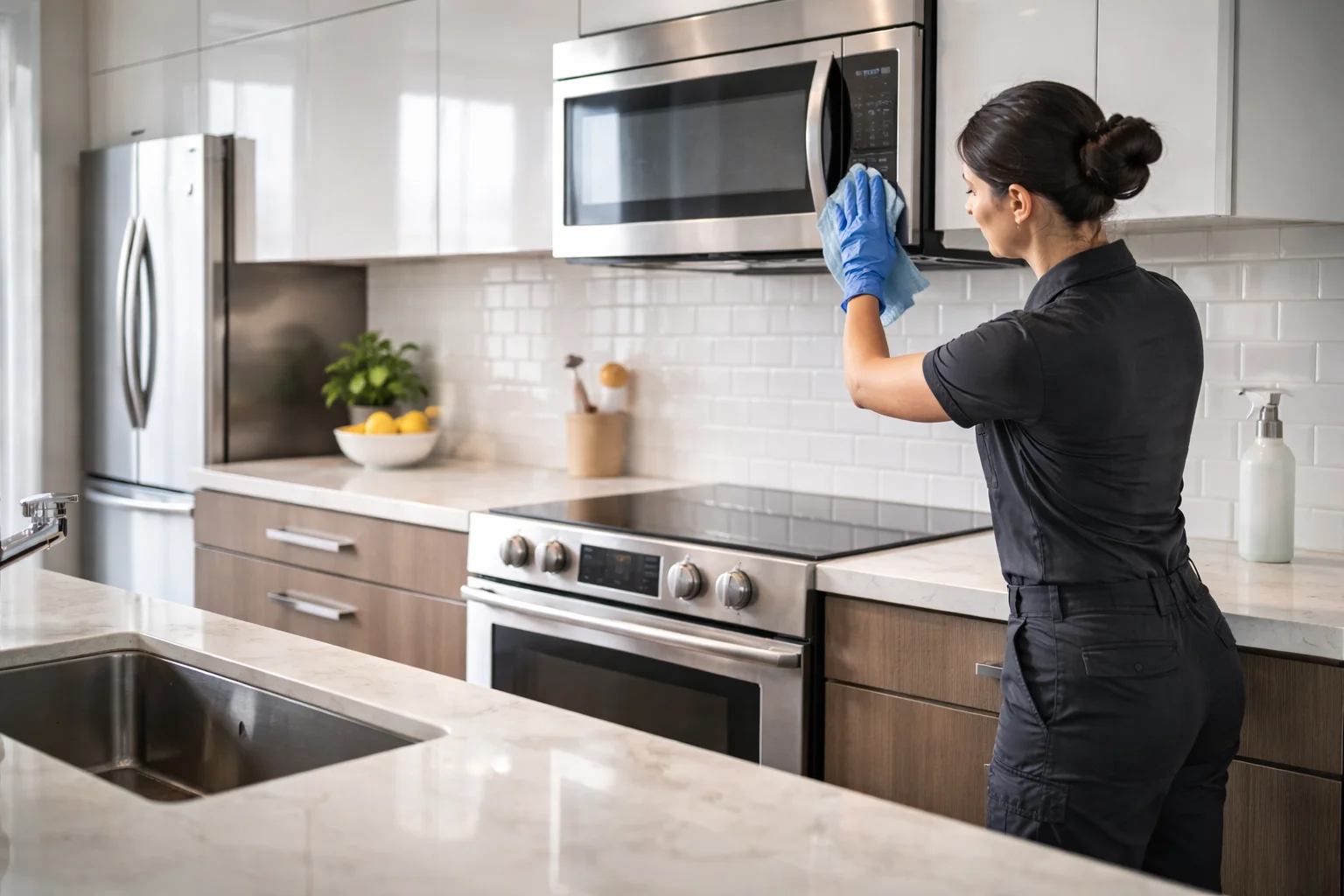
Kitchens are usually one of the most labour-intensive parts of a deep clean because grease, crumbs, residue, and splash marks collect in more places than people realise.
That often includes countertops, backsplash areas, sinks, faucets, cabinet fronts, appliance exteriors, and in some cases the inside of selected appliances as well.
Typical Kitchen Deep Cleaning Focus
- countertops and backsplash areas
- cabinet fronts, edges, and handles
- sinks, drains, and faucets
- appliance exteriors and selected interiors if included
- grease-prone areas around cooking zones
Bathroom Detailing and Hygiene Work
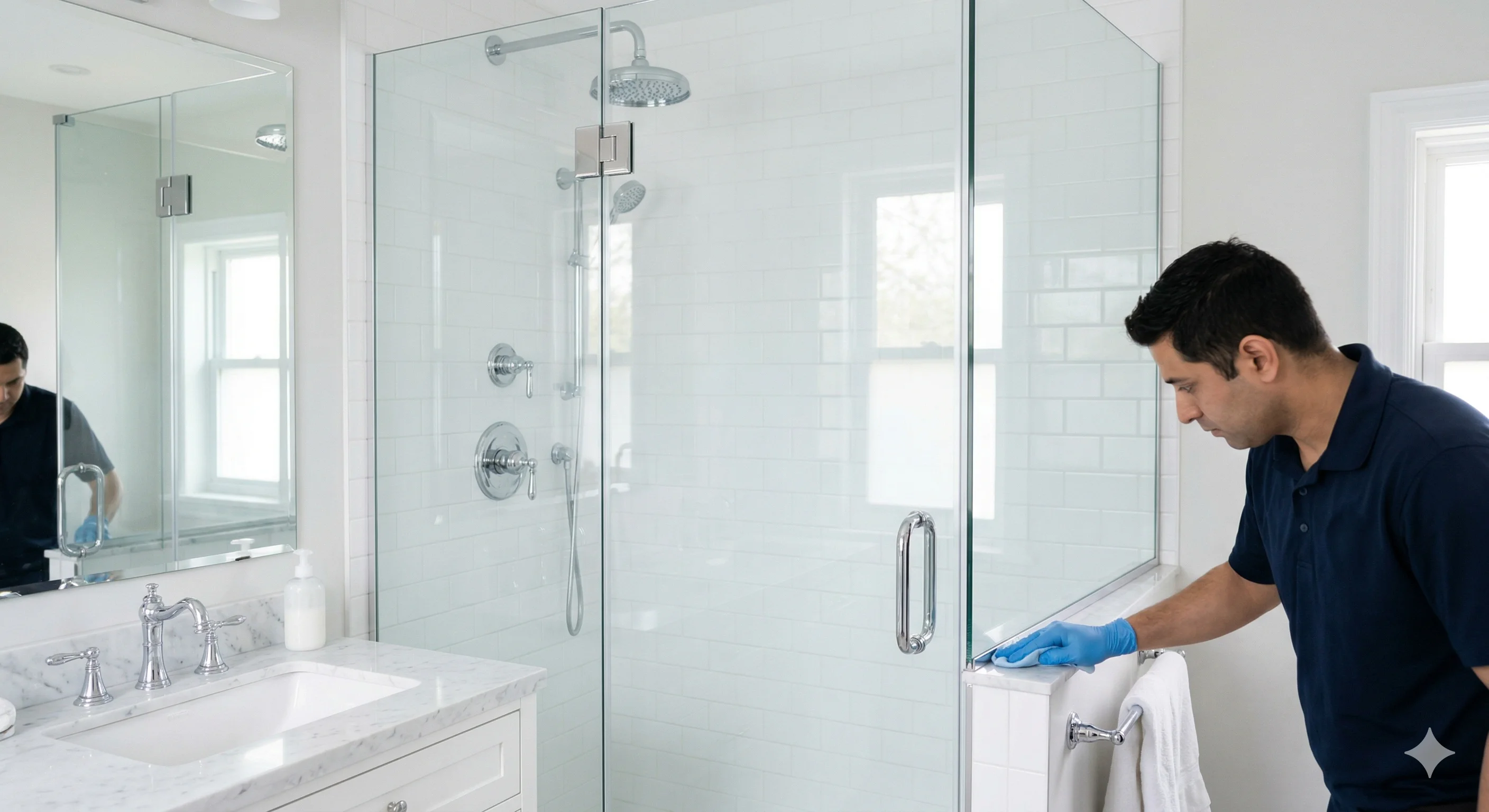
Bathrooms need the right chemistry and technique because soap scum, limescale, body oils, and moisture residue build up differently from ordinary dirt in other rooms.
A proper process includes fixtures, toilets, vanities, sinks, mirrors, shower or tub zones, and buildup-prone edges that may look fine from a distance but still hold visible residue up close.
Living Areas, Bedrooms, Shelves, and Forgotten Edges
This is where detailed deep cleaning often becomes most visible. Window sills, shelves, trim, frames, corners, ledges, and other overlooked areas stand out much more once the obvious surfaces are already clean.
These are also the places where dust often sits for months because they are usually skipped in a quick routine wipe-down.
Floor Finishing Comes Near the End
Floors are usually finished after the upper and mid-level surfaces are done. That way dust and debris from the rest of the process do not fall back onto already-finished floor work.
Depending on the material, this may include vacuuming with strong filtration, edge work, mopping with surface-specific products, or extraction work where that is part of the scope.
Typical Deep Cleaning Workflow by Stage
Final Inspection and Touch-Ups
A deep cleaning job should not end the second the main tasks are complete. A final room-by-room check matters because streaks, missed corners, or small detail issues are easiest to catch at the end, before the team leaves.
This is the stage where the whole process is reviewed and any final touch-ups are handled so the result feels complete rather than rushed.
What We Check Before We Leave
Before a deep cleaning job is considered complete, the home should be checked again with fresh eyes. That means looking for missed detail areas, streaks, dust that settled later in the process, and any finishing touches that still need to be handled.
This last pass is one of the things that makes the job feel complete rather than rushed.
Typical Final Check Points
- switches, handles, rails, and touch points
- corners, trim, vents, and shelf edges
- bathroom fixtures, mirrors, and glass for streaks
- floors after all upper dust has been removed
- final touch-ups before walkthrough completion
Why Professional Deep Cleaning Takes Longer Than Basic Cleaning
Deep cleaning takes longer because it includes more than visible upkeep. It involves more touch points, more product selection, more careful handling, more buildup removal, and more areas that routine maintenance usually skips. If you are still comparing the service category itself, our deep cleaning vs regular cleaning guide explains that difference in more detail.
That is why a real deep clean usually feels different when it is finished. The home does not just look wiped down. It feels more properly reset.
What Makes the Result Feel Different
- switches, handles, shelves, and detail areas are actually included
- heavier buildup is dealt with instead of worked around
- dust is removed in a more systematic way
- the process ends with inspection rather than a fast exit
What This Deep Cleaning Process Is Not Designed For
A professional deep cleaning process is still a cleaning service. It is not the same as remediation, restoration, or specialised hazardous cleanup. Knowing that distinction helps set the right expectations before the work starts.
If the issue involves active mold, sewage, biohazard risk, major debris hauling, full duct cleaning, or another specialised restoration category, it should not be treated as a standard deep clean. For a closer distinction, see our deep cleaning vs remediation guide.
This Process Is Usually Not For
- active mold remediation
- sewage or biohazard cleanup
- full duct cleaning
- heavy construction debris hauling
- specialised restoration work