Name the work that was done.
For example: new kitchen cabinetry, bathroom tiling or flooring. List the rooms, new materials and leftover residue. “Kitchen clean” does not tell us whether ten empty drawers need cleaning inside.
Fine-dust removal and careful detailing, planned around the rooms you need back.
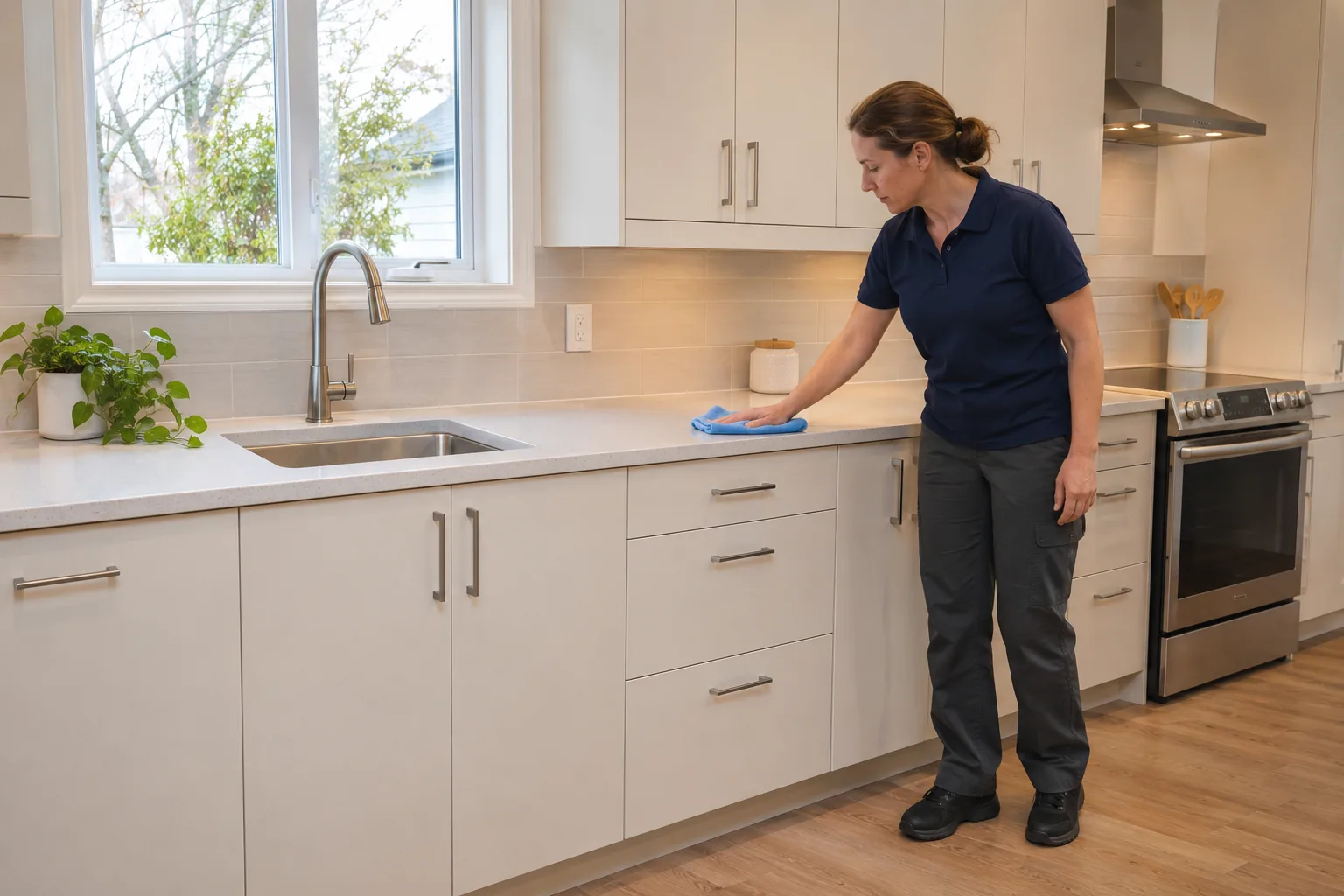
A tidy-looking room can still have dust on door tops, drawer runners and the edges of new fittings.
Even a well-kept home can need substantial work after renovation. The detail is often in places that routine cleaning rarely reaches, and dust can travel beyond the room where the work happened.
Our Beamsville post-renovation cleaning service covers final-stage post-construction cleaning after the main building work is complete. We identify the affected rooms, assess the new finishes and agree the tasks before planning the team.
No recent building work? For household grease, bathroom buildup and neglected details, see Beamsville residential deep cleaning. A move without renovation has a different scope: see move-out and handover cleaning.
For example: new kitchen cabinetry, bathroom tiling or flooring. List the rooms, new materials and leftover residue. “Kitchen clean” does not tell us whether ten empty drawers need cleaning inside.
Check nearby shelves, ledges and floor edges for settled dust. Tell us which rooms stayed occupied and what furniture remains. Add affected areas to the scope instead of assuming the whole home needs identical work.
Check the entrance, hallway and stairs used by trades. Note where equipment can be unloaded and where keys will be available. Agree which areas can be handed back first if you are still living there.
Example: a kitchen renovation may need cabinet detailing, dust collection in the adjoining dining room and cleaning of the hallway used for deliveries. Your scope depends on where dust and residue are actually found.
Sanding, cutting and drilling should be complete, with tools and major debris removed. Tell us about return visits and touch-ups. Continued dust-producing work can undo the final clean.
Keep the installer’s care instructions for paint, flooring, grout and sealant. Share the product or finish name where you can. A newly fitted surface is not necessarily ready to be washed.
Empty included drawers and shelves, clear sills and arrange water, power and entry. Secure valuables and keep children and pets away from active work. Leave time for cleaning and drying before furniture arrives.
Tell us before booking about still-curing finishes, unresolved leaks, unusually heavy powder or residue whose source is unclear. Some work may need to wait for the installer or a specialist.
These examples show the detail we assess. Your written scope confirms the rooms, surfaces and extras included in your clean.
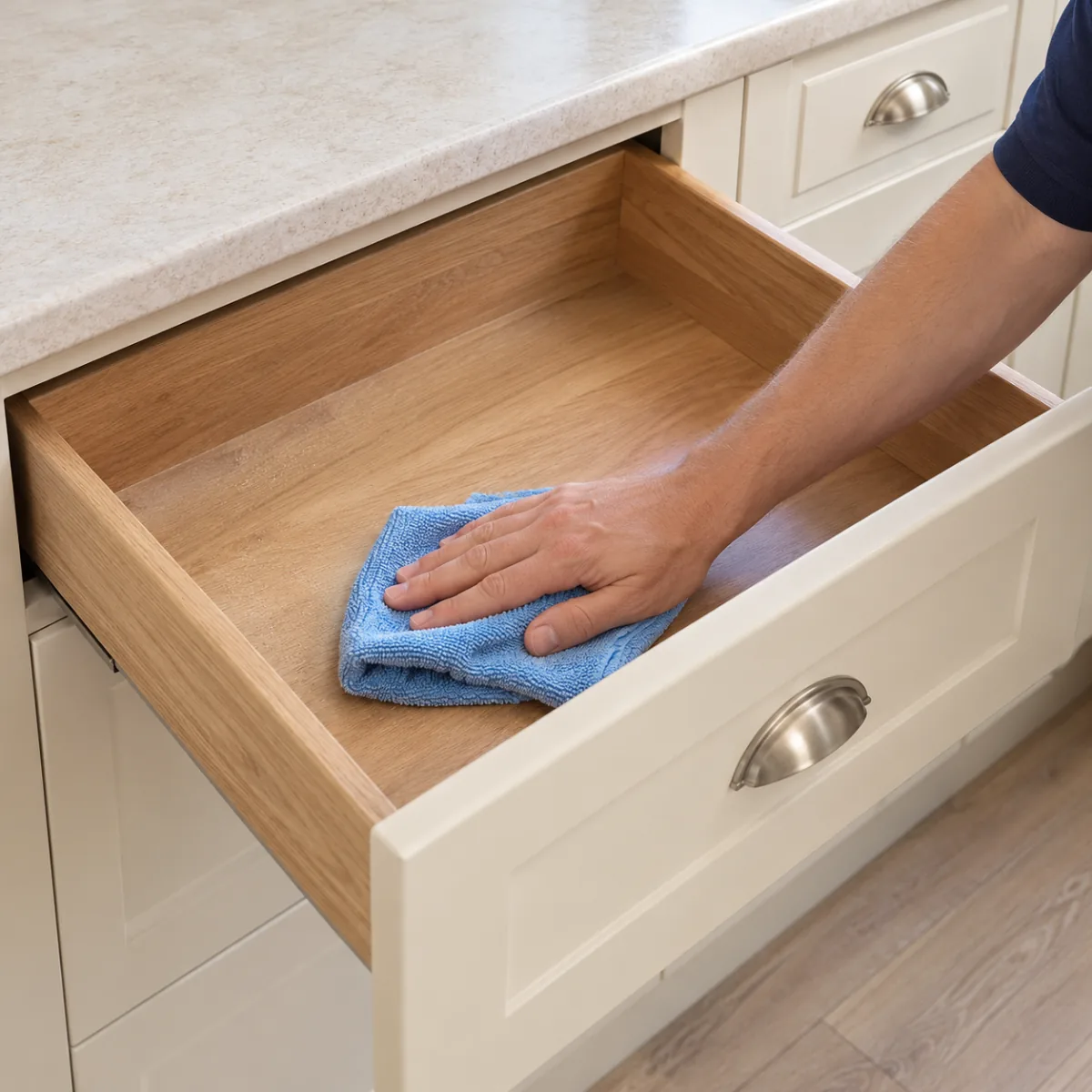
Loose dust is collected before compatible damp cleaning of the agreed cabinet fronts, handles, worktops, sink and appliance exteriors. Cloths are changed as they load with dirt; joints and unfinished edges are not soaked.
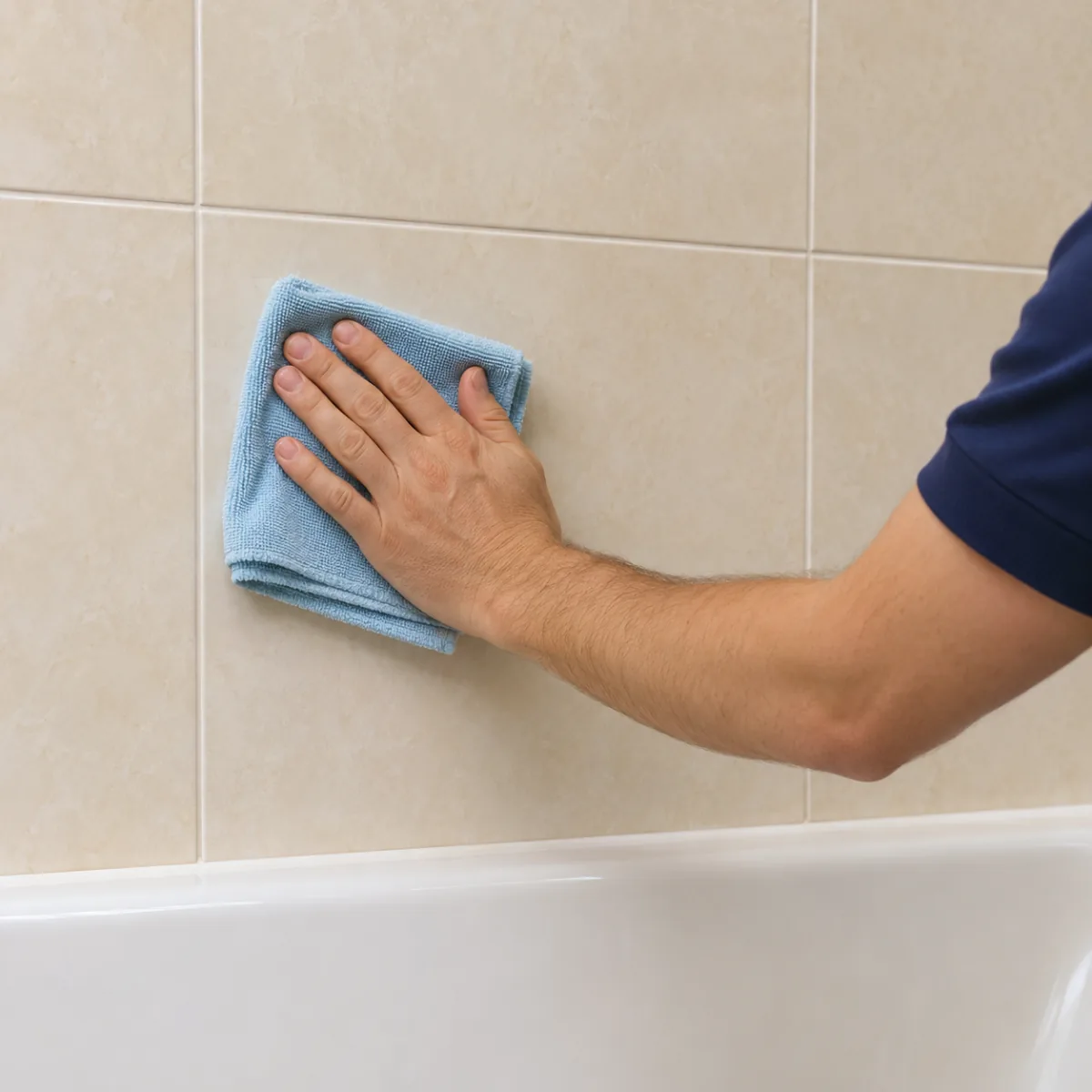
Powder and residue need different treatment. After loose dust is collected, we clean compatible tile, glass and fittings with controlled moisture. New grout and sealant must be ready for this work.

We collect grit before damp cleaning, then work on compatible floor surfaces after higher detail work is finished. Edges and junctions get their own attention. A clean-looking centre does not show what remains at the perimeter.
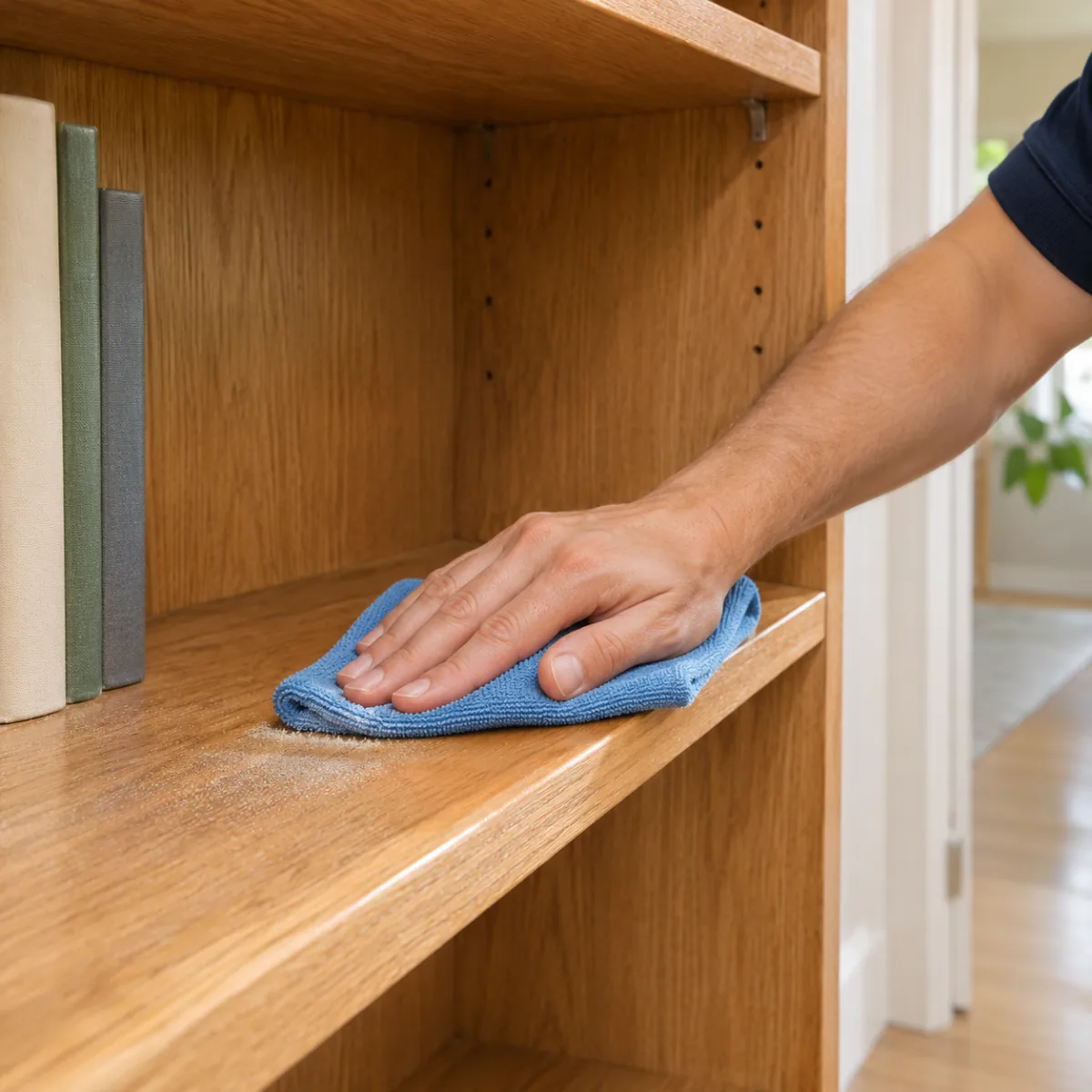
Nearby shelving, door trim and other agreed accessible surfaces can hold settled dust. Light deposits can be lifted with a clean cloth; heavier powder needs suitable collection first, without brushing it into the air.
Name any surfaces or belongings that must be left alone.
These tasks need their own time allowance and a material or access check.
Heavy furniture and appliance movement need a separate safe arrangement.
Glass · frame · sill · track · screen. A clean pane can still have dusty channels beneath it. Tell us which parts need cleaning, how many windows there are and whether any are high or outside. We confirm access and residue removal before including them.
It does not measure the number of drawer interiors, window channels or residue spots. A small renovation can still involve many hours of detailing.
How we calculate cleaning costs →Provide the approximate square footage to be cleaned, rooms, floor levels and unusual heights. For a partial clean, distinguish the work area from the size of the whole home.
Send a wide photo of each affected room plus close-ups of residue. Count cupboard interiors and window parts. Include finish instructions and anything already used to clean the surfaces.
Tell us when trades finish, who lets us in, which rooms remain occupied and when furniture or belongings return. Identify the person who can answer questions and review the completed work.
We use the task list to estimate combined cleaner-hours, then plan the team and visit. Four cleaners working eight hours provide 32 cleaner-hours—not a promise that every home takes eight hours.
Use the cleaning-quote photo checklist →Putting water straight onto loose renovation powder can spread a film across the surface. We plan the sequence so detailed work above does not undo the floor clean below.
Read the detailed post-renovation process →Confirm priorities, access, new materials and existing marks. Assign tasks from the scope. Discuss any changed conditions or additional work before adding it.
Work from agreed higher surfaces towards lower ones. Use suitable vacuum attachments for loose material and clean microfibre for light settled deposits. Avoid dry sweeping or brushing heavy powder into the air.
Damp-clean compatible surfaces after loose dust is collected. Turn and change cloths as they become dirty. Treat corners, fittings and approved residue individually; test uncertain finishes and stop if they react.
Clean the floors after higher work, allow for drying and inspect the agreed areas. Show you any remaining marks or inaccessible surfaces and explain what needs further attention.
Use the written task list during the walkthrough. Raise a missed area before the team leaves, and confirm any drying or care instructions before returning belongings.
Our cleaning commitment →Fine dust can settle again if it is redistributed from nearby work or other parts of the property. There is no single waiting period for every renovation. Surface cleaning does not certify indoor air quality.
"Second to none service! Last deep clean was just before a wedding at my lakefront home. Every detail perfect, house was spotless including second storey windows."
 Google Review
"Fast, super detailed, and came with everything needed — we didn’t have to worry about a thing. By far the best cleaning company we’ve worked with. Highly recommend!"
Google Review
"Every thing, and I mean everything, was clean and fresh. Like magic!"
Google Review
Practical answers for new finishes, occupied rooms and the details to include.
More about booking and scope →Not automatically. Start with the kitchen, the route used by trades and nearby rooms where dust has settled. Include each area that actually needs work in the written scope. Tell us which doors were kept open, where materials were carried and what furniture stayed in place. We can assess the affected areas without treating every room as the same job.
Tell us which rooms you need to use and where belongings will stay. We will discuss a workable room sequence, entry route and a place for children and pets away from active cleaning and wet floors. If sanding or cutting is still happening nearby, postponing the final clean may be more useful than cleaning rooms that will be exposed again.
Ask the contractor to remove rubble, offcuts, loose nails, sharp debris, tools and leftover building materials. Tell us about protective coverings or films rather than removing them without the installer’s advice. Our final cleaning scope addresses agreed surface dust and residue; it is not construction-waste disposal or hazardous-material remediation.
The installer or product instructions should confirm when each finish is ready and which methods are suitable. Paint that feels dry may still be curing. We need to know the floor finish, tile or stone type and any care restrictions before choosing products or moisture levels. If this information is missing, tell us during assessment rather than assume every new surface can be washed.
Only the parts listed in the agreed scope. Count the cupboards and drawers to be cleaned inside and empty them before the visit. For windows, list interior glass, frames, sills, tracks and screens separately. Exterior glazing, high access, protective-film removal and difficult installation residue need their own assessment.
No. We assess the amount of dust, the finish, its curing stage and safe access. Some surfaces need controlled dust collection; others may allow damp wiping or washing. Full wall and ceiling cleaning is a separate task to specify, not an automatic part of every room. Scrubbing marks from a new painted surface can damage it.
We consider the area to be cleaned, then add the actual detail work: window parts, empty cabinet interiors, floor film, fittings, reachable heights and connected rooms. We estimate combined cleaner-hours and use those hours to plan the team and visit. A small kitchen with many interiors and residue spots can need more work than a larger open room.
Fine dust can be redistributed from nearby work, unopened storage, furnishings or ventilation. There is no fixed settling period for every renovation. Send photos and tell us whether trades, deliveries or unpacking followed the clean so we can discuss what needs attention. Duct-interior cleaning and air-quality testing are not included in this surface-cleaning service.
For a Beamsville renovation, send the property location, rooms involved and access arrangements. Whether you are finishing one room or a whole home, the quote starts with the work you need completed.
For properties elsewhere in Lincoln, see our Lincoln post-renovation cleaning page. You can also compare services on the Beamsville cleaning hub.
Share the square footage, work completed and the details you want included. We will assess the surfaces, scope and timing before agreeing the visit.