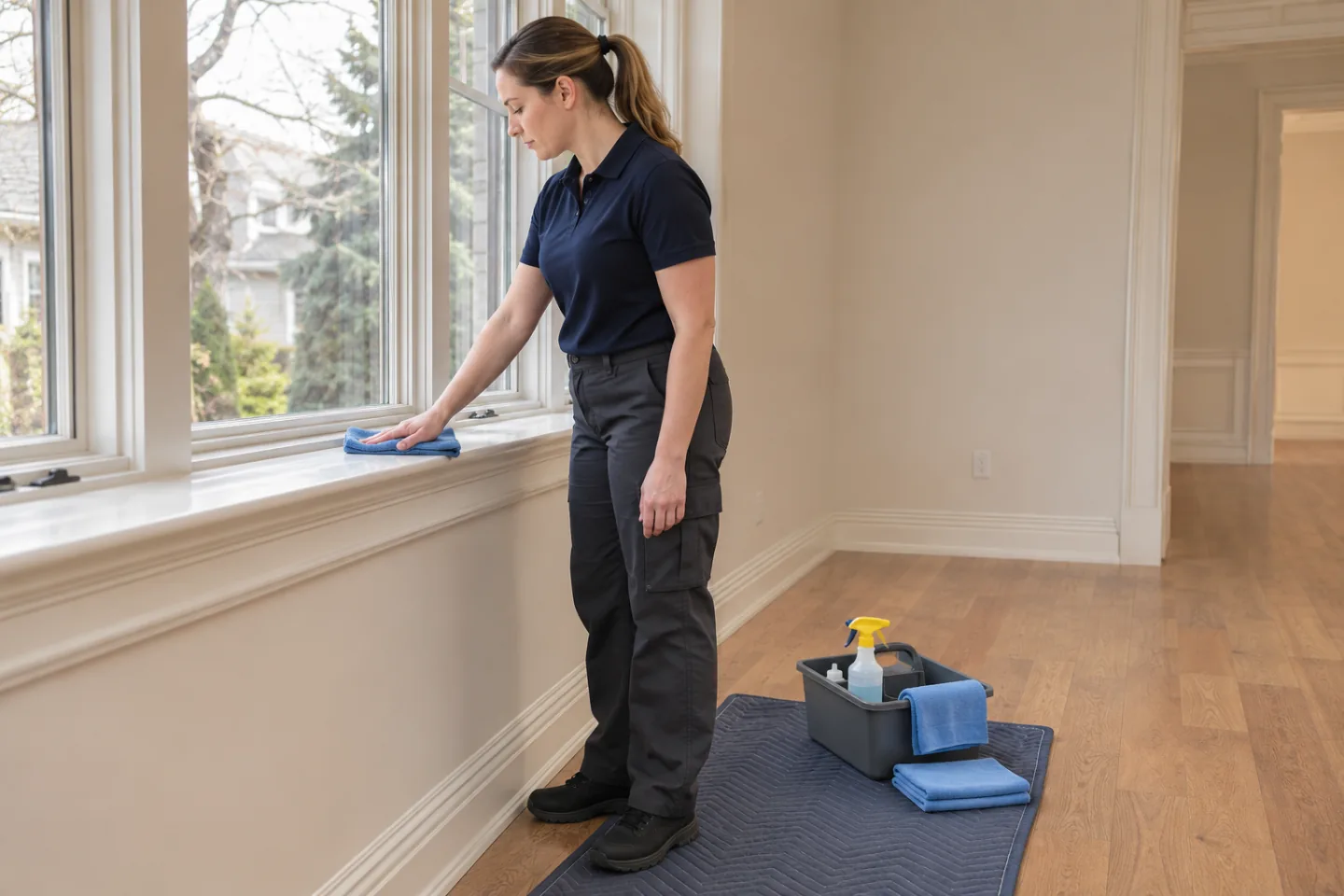
What did you notice?
1. A fresh layer appeared after the clean
Check what changed after the surface was cleaned. A curtain fitter drilling above a bedroom sill can leave fresh dust even if the sill was clear at handover. Ask what dusty work remains before arranging another visit. A message like this gives the contractor a place and time to investigate:
“The bedroom sill was cleaned on Tuesday. A pale layer was visible again on Wednesday after the curtain fitter drilled above the window. The attached pictures show the sill and the work area. Can we confirm what cleanup remains?”
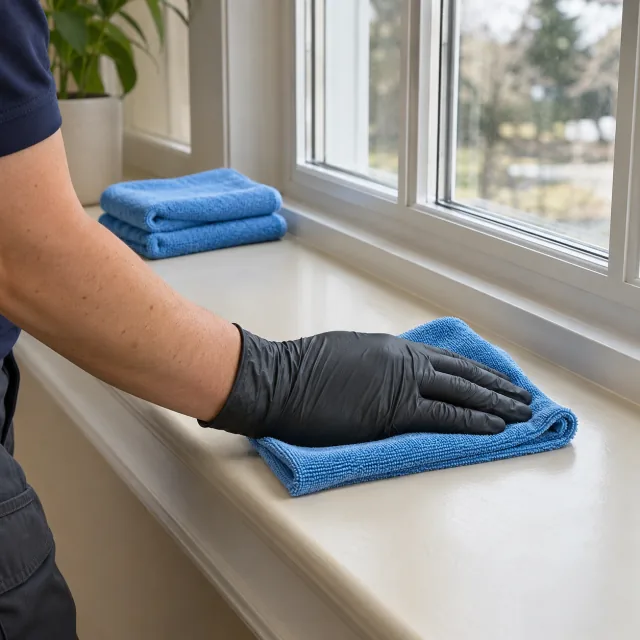
2. Grit was already there at handover
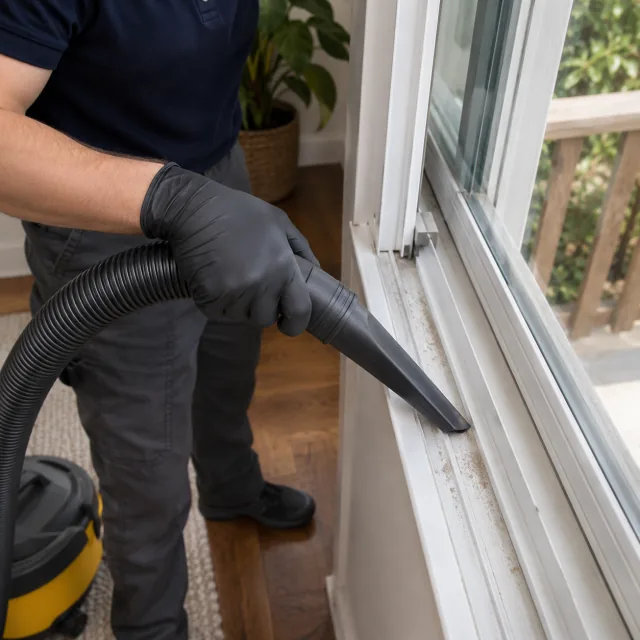
Take a close-up and a wider photo before wiping the area. Check the written scope: a quote might include window glass and sills without including the tracks. If the track was included, ask the cleaner to review that specific window promptly.
For example, if the track was included, look at its corners as well as its centre. The cleaner can collect loose grit first, then lift remaining soil with a lightly damp cloth where the finish permits. Check the corners once dry. One missed track gives you a specific item to review together.
3. The same haze remains after cleaning
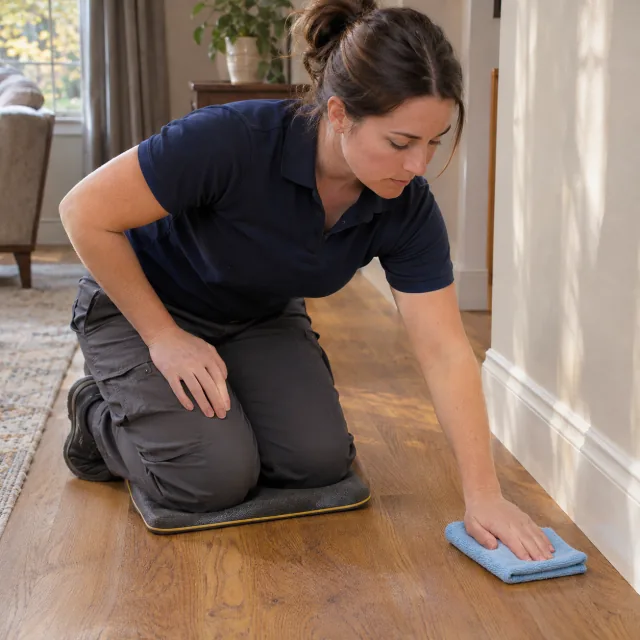
Do not keep scrubbing or try a stronger product without identifying the surface and residue. See how a wood-floor haze assessment works.
On a newly finished wood floor, ask the installer what finish was used, when it was applied and which cleaning method it permits. If the installer recommends a spot test, let the test area dry before comparing its sheen with the surrounding boards. If the film persists or the sheen changes, stop and send the installer a photo.
What to check during the following week
During the following week, check the same sill, track or floor patch if dust returns. A photo from the same angle makes changes easier to see. Report missed work or an unusual deposit as soon as you notice it.
Plan the work that is actually needed.
When you contact Let’s Get It Clean, include the room, the affected surface, when you first saw the dust and any trade work since the clean. Those details help us assess whether a targeted visit makes sense.
Explore post-renovation cleaning
Local service details: Mississauga · Oakville · Vaughan